Signal from Noise: Super Intelligence That Isn't Artificial
Can software agents discover signal in quantum noise without shipping insecurity at machine speed? That's the question I keep coming back to. My short answer is yes, but only if we stop treating speed as the goal. The frontier is not raw speed. It is reliable decisions.
Quantum computing, software agents, and predictive analytics look like three separate fields. They're converging around the same engineering problem: turn uncertain observations into useful action while keeping errors visible, bounded, and auditable. In this piece I want to explore quantum readiness, human-supervised coding, and predictive systems that measure uncertainty before making a decision, and explain why I think the strongest "super intelligence" isn't artificial at all.
Signal versus noise
Every useful system starts with an observation, and every observation comes with noise.
In quantum computing, noise is built into the physics. A qubit is fragile. Measuring it gives you an outcome drawn from probabilities, and the environment keeps nudging the system off course. You don't get one clean answer. You run a circuit many times and look for the pattern that rises above the static.
Software has its own version of this. A test passes on one run and fails on the next. A monitoring alert fires, then goes quiet. A dashboard metric jumps, and nobody is sure whether it's a real change or a glitch in the data pipeline. These flaky signals are where bad decisions come from, because it's tempting to act on whatever the latest reading says.
And in predictive analytics, which is my home turf, every data point is an uncertain observation. Claims come in late. Records are incomplete. People behave in ways no model fully captures. The job is never to pretend the noise isn't there. The job is to measure it.
Sound is a friendly place to see this. A note from a guitar string is a signal you can describe exactly, and everything around it is noise to be measured.
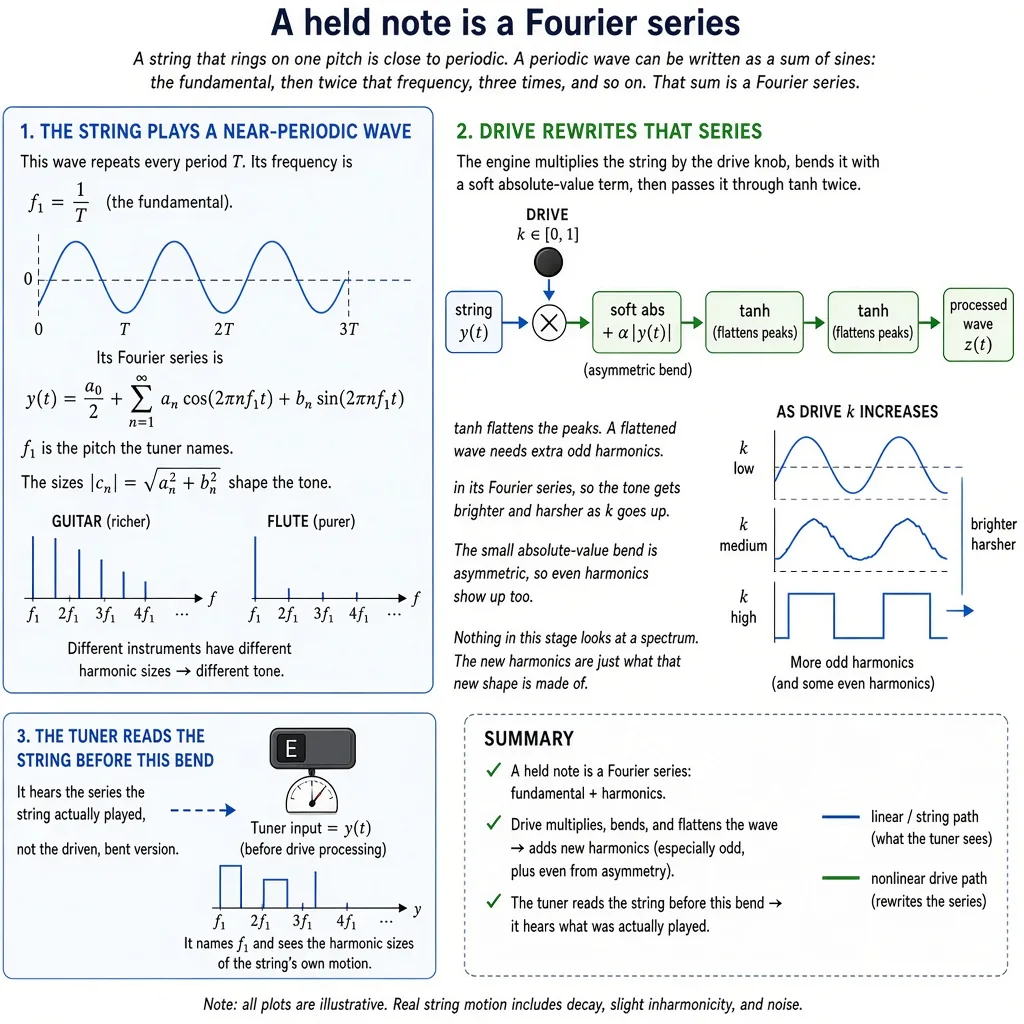
The common thread is simple: you can't find signal unless you're honest about the noise.
Quantum readiness is a people problem first
When people hear "quantum readiness," they often picture a race for bigger machines. I think of it differently. Being ready means preparing teams and systems for a world where quantum tools become part of the toolkit, and that work starts long before any particular breakthrough.
Part of that is post-quantum security awareness. Much of today's encryption relies on math problems that are hard for classical computers. Sufficiently capable quantum computers could change that for some of those methods, which is why researchers and standards bodies have been developing post-quantum cryptography. A ready team knows where its sensitive data lives, which systems depend on which kinds of encryption, and how it would update them. That's an inventory and planning exercise, not a sprint.
The other part is literacy. Engineers, analysts, and decision-makers need enough understanding of how quantum results are produced, including the noise, the repetition, and the statistics, to read them critically. A quantum output is an uncertain observation like any other. Treating it as gospel because it came from an exotic machine is the same mistake as trusting a flaky test.
Human-supervised coding: speed with a gate
Software agents can now write, refactor, and ship code remarkably fast. But speed cuts both ways. An agent that can produce a feature in minutes can also produce a security hole in minutes, and if nothing stops it, that hole ships at machine speed.
The answer isn't to slow the agents down. It's to put measurement and accountability around them:
- Tests that run every time. Automated checks catch regressions before a person even looks.
- Review by someone other than the author. A second set of eyes, human or a separately responsible reviewer, reads the change with fresh context.
- Accountable merge gates. Nothing reaches production just because it was generated. Someone owns the decision to merge.
- A visible trail. Every change has a description, a diff, and a record of who approved it, so errors stay auditable.
This very site is built that way. One agent opens a change, and a different reviewer is responsible for merging it. The author never approves its own work. It keeps mistakes visible and bounded instead of silent and compounding.
Measure uncertainty before you decide
I'm an actuary by training, and actuaries are paid to be honest about uncertainty. We don't just give a number. We give a range, and we explain how confident we are in it. That instinct is exactly what predictive systems need.
A good predictive system does three things before it acts:
It quantifies its uncertainty. A confidence interval or prediction interval says, "here's my best estimate, and here's how wrong I might reasonably be." A wide interval is information. It tells you the data can't support a sharp answer yet.
It's calibrated. When a well-calibrated model says something is 80% likely, it should happen roughly 80% of the time across many such predictions. Calibration is testable, and it's one of the most underrated checks in machine learning. A model that is confidently wrong is more dangerous than one that is honestly unsure.
It knows when to defer. When uncertainty is high, the stakes are high, or the case looks unlike anything in the training data, the right move is to hand the decision to a person. That isn't a failure of the system. It's the system working as designed.
Put those together and you get a system whose errors are visible, bounded, and auditable, the same standard I'd want from quantum results and from agent-written code.
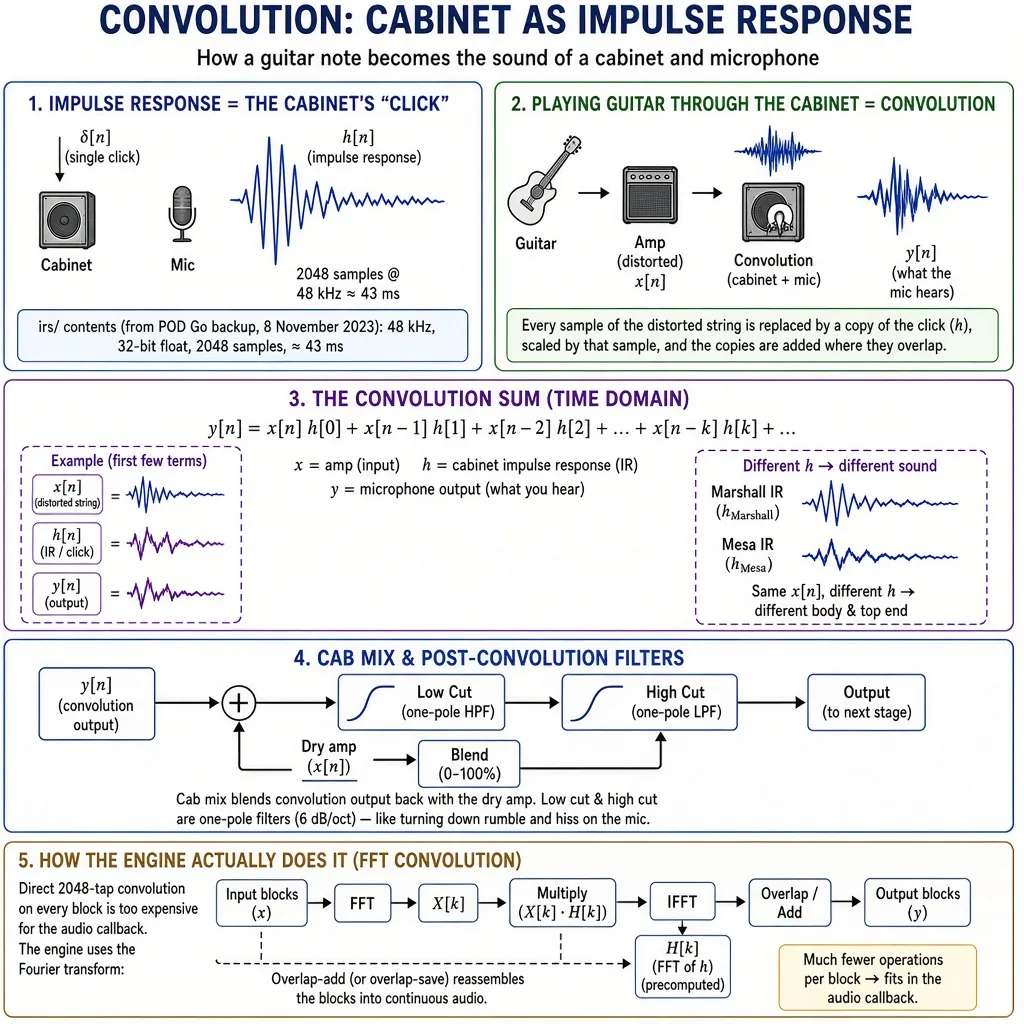
The super intelligence that isn't artificial
This is where the title comes from. When people talk about super intelligence, they usually mean a machine that's faster and smarter than any person. I think that framing misses what actually works.
The strongest systems pair automation with measurement, testing, and accountable human review. The machine brings speed, scale, and tireless pattern-finding. The people bring judgment, context, and responsibility for the outcome. Measurement connects the two, so everyone can see how confident the system is and where it might be wrong.
That combination is smarter than either half alone. It's a kind of super intelligence, but it isn't artificial. It's human and machine working together, with the errors kept in plain view.
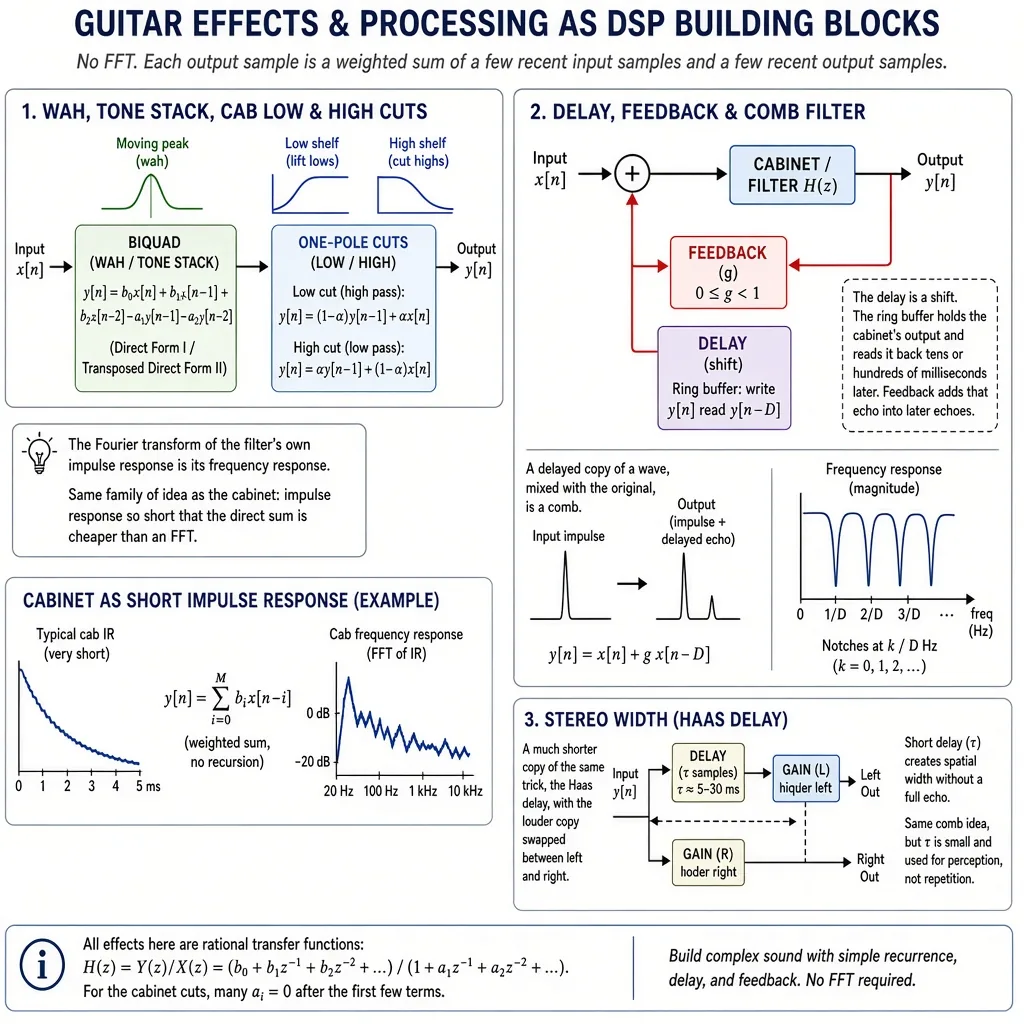
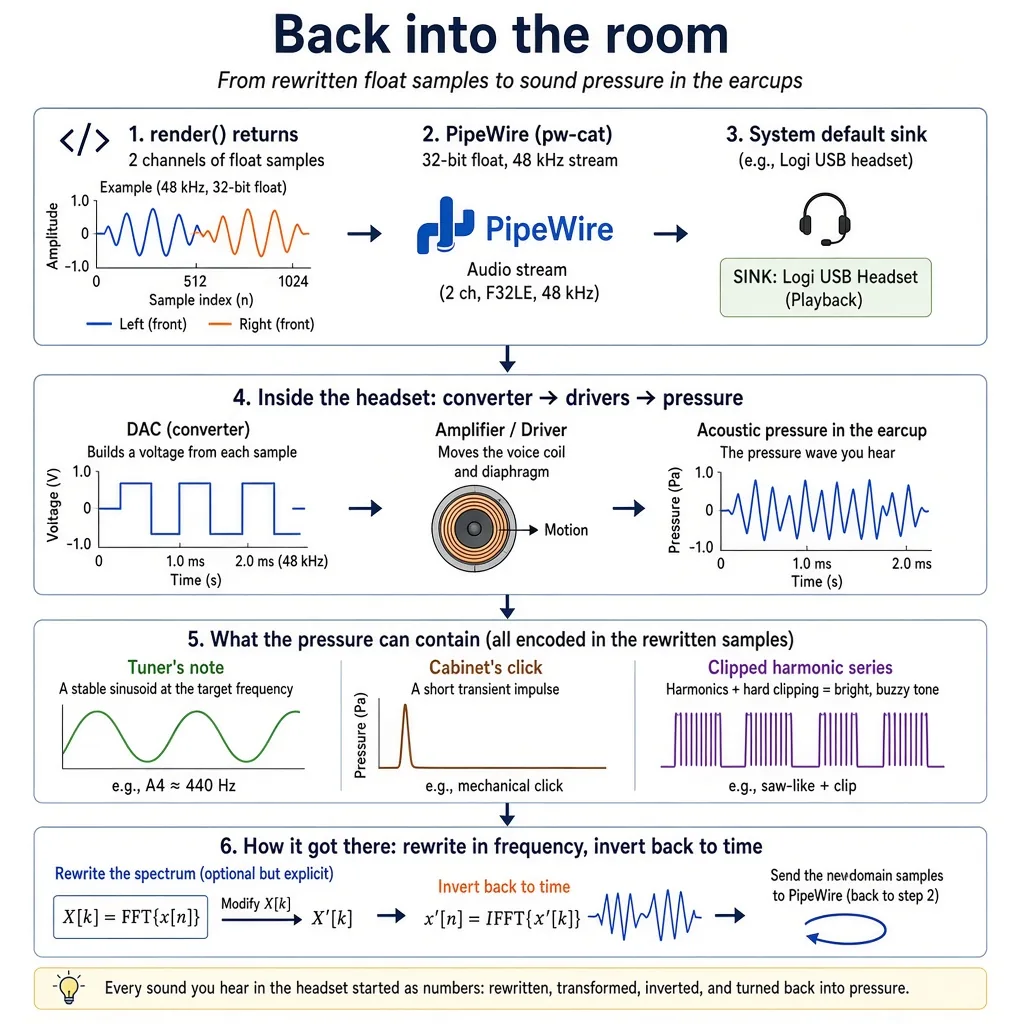
Signal science is also the prerequisite to understanding speech models. A text-to-speech system turns words into a waveform, then shapes that waveform until it sounds like a human voice, using the same ideas of frequency, filtering, and measurement you see in these graphics. If you can read a waveform, you can start to see how a machine learns to talk. And it isn't only people: dolphins speak in their own language of clicks and chirps, and those are signals too.
Why this is PassMyExam's mission
This is also why I started PassMyExam, which went through the Capital Factory accelerator. Our mission is to make artificial intelligence safer through education and training on superintelligence. We believe the safest path forward is one where people understand the systems they rely on: how they measure uncertainty, where noise creeps in, and when a human needs to step in. Safer AI isn't only an engineering problem. It's an education problem, and that's work we can all take part in.
Let's find the signal together
If you're working on quantum readiness, building with software agents, or trying to make a predictive model more honest about what it doesn't know, I'd love to hear from you. Bring your noisy data, your flaky tests, and your hard questions. That's where the interesting work is.
Book a call, send a note, or just say hi. The door is open.